
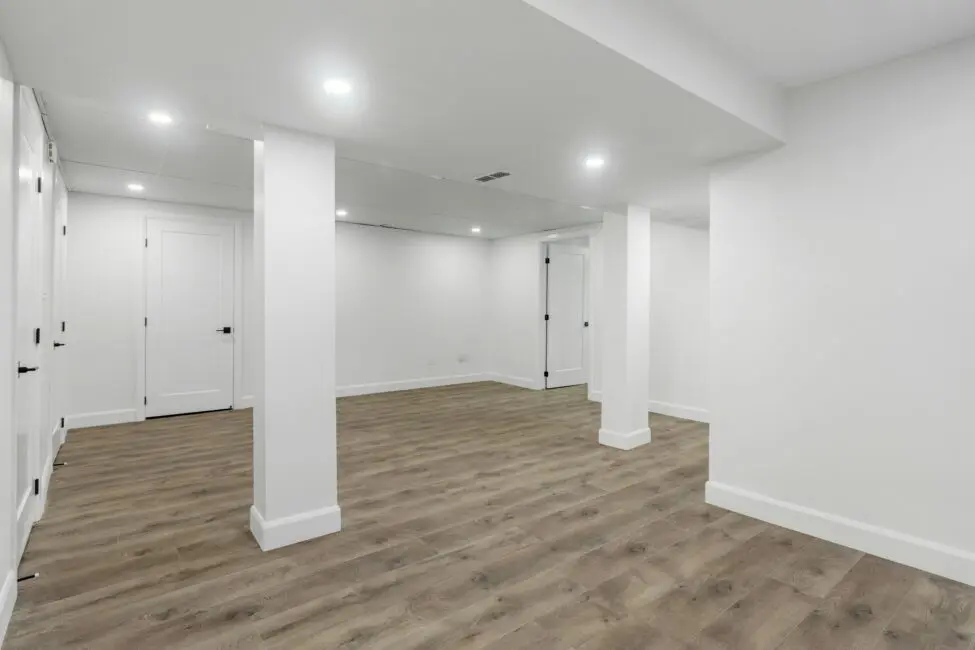
Basements present a unique set of challenges for flooring — and getting it wrong is an expensive mistake. Between moisture, cooler temperatures, the risk of occasional water intrusion, and the fact that concrete subfloors move differently than wood, not every flooring material belongs below grade. Here’s what you need to know before choosing flooring for your Lancaster area basement.
The Core Challenge: Moisture
Even in basements that have never flooded, moisture is always a factor. Concrete is porous — it absorbs and releases moisture constantly. In Lancaster County, where we experience hot, humid summers and cold winters, this moisture movement can cause materials that aren’t designed for it to warp, buckle, swell, or develop mold. Before any flooring goes down in a basement, the subfloor needs to be dry and any moisture issues need to be addressed.
The Best Flooring Options for Basements
1. Luxury Vinyl Plank (LVP) — Our Top Pick
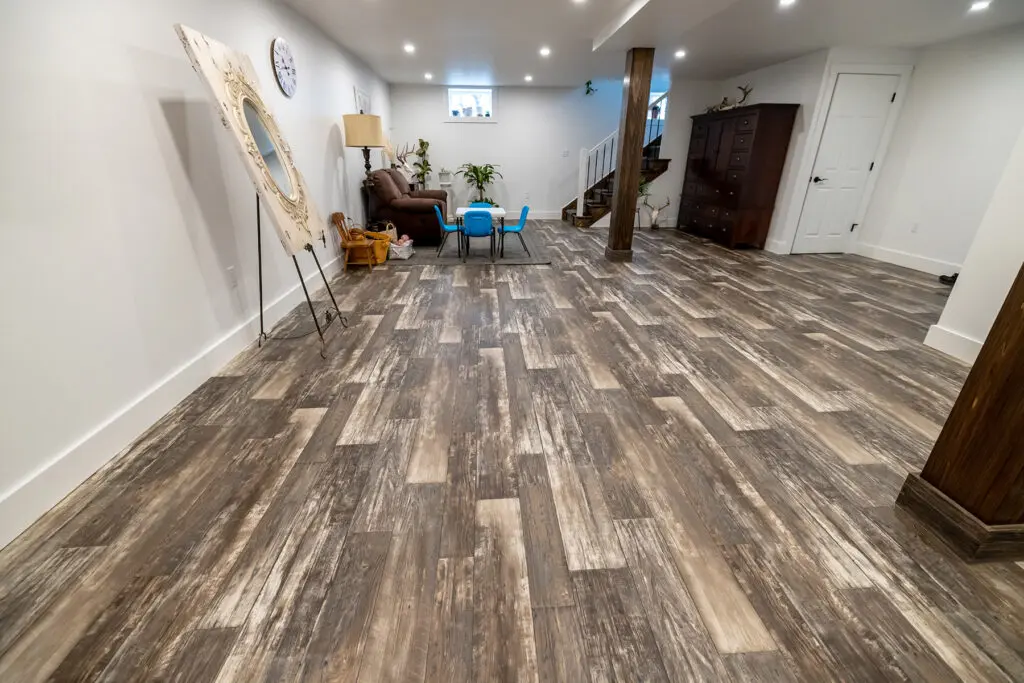
LVP is hands down the most practical choice for most Lancaster basements. It’s 100% waterproof, comfortable underfoot, installs as a floating floor (so it can expand and contract with temperature changes), and looks great in wood-look or stone-look finishes. SPC (stone plastic composite) core LVP is particularly well-suited for basements because it’s rigid, dimensionally stable, and handles the temperature fluctuations common in below-grade spaces. If your basement ever takes on water, LVP can often be dried out and reinstalled rather than replaced.
2. Ceramic or Porcelain Tile
Tile is another excellent basement choice because it’s inherently waterproof and extremely durable. The main drawback is comfort — tile is hard and cold underfoot, which matters if your basement is a family room or home office. Large-format tiles work particularly well in basement rec rooms and give a finished, high-end look. If comfort is a concern, area rugs can help.
3. Engineered Hardwood (With Caveats)
Engineered hardwood can work in a basement that is reliably dry and climate-controlled. Its plywood core handles humidity better than solid hardwood, but it is not waterproof and is not a good choice for basements with any history of moisture issues. If you love the warmth of real wood and your basement has never had a water event, talk with our team about whether this option makes sense for your specific space.
What NOT to Install in a Basement
- Solid hardwood: Concrete subfloors off-gas moisture constantly, and solid hardwood will absorb it and eventually warp.
- Standard laminate: Very water-sensitive. Even waterproof laminate is a riskier choice in basements than LVP.
- Carpet (in moisture-prone basements): Carpet is very difficult to dry thoroughly once wet, and mold can develop underneath without being visible.
Subfloor Prep: The Step You Can’t Skip
In Lancaster County, older homes in areas like Strasburg, Quarryville, or the city of Lancaster may have basements with uneven concrete or long-standing moisture issues. Before any new floor goes in, Heritage Floors will assess the subfloor condition and recommend the right prep — whether that’s self-leveling compound, a vapor barrier, or a moisture mitigation system. Skipping this step is the number one reason basement floors fail prematurely.
Popular Basement Uses and Flooring Recommendations
- Home theater or rec room: LVP with a thick attached underlayment for warmth and sound absorption
- Home office: LVP or engineered hardwood if the space is dry and well-conditioned
- Playroom: LVP — waterproof and easy to clean up after kids
- Guest bedroom: LVP with area rugs for warmth and comfort
Let’s Talk About Your Basement
Every basement is different. The team at Heritage Floors has helped homeowners throughout Lancaster County — from new construction in Lititz to finished basements in older Ephrata homes — find the right flooring solution. Come in, tell us about your space, and we’ll make sure you get it right the first time.