

The kitchen might be the hardest-working room in your home. Between spills, dropped dishes, muddy shoes, and the daily grind of cooking, your kitchen floor takes a beating. Choosing the right material means you won’t be replacing it again in five years — and you’ll actually enjoy the way it looks while it holds up. Here’s what Lancaster homeowners should know about kitchen flooring options.
What Makes a Great Kitchen Floor?
Kitchen flooring has to clear a high bar. It needs to be waterproof (or at minimum highly water-resistant), easy to clean, comfortable to stand on for extended periods, and durable enough to handle heavy foot traffic, dropped utensils, and the occasional pot of water. Aesthetics matter too — the kitchen is often the heart of the home, and the floor sets the tone.
Top Kitchen Flooring Options
1. Luxury Vinyl Plank (LVP)
LVP has become one of the most popular kitchen flooring choices for good reason. It’s 100% waterproof, comfortable underfoot, highly resistant to scratches and scuffs, and available in a wide range of wood-look and stone-look designs. It’s also among the most affordable options on a per-square-foot basis. For families with kids or pets in Lancaster, Lititz, or Ephrata, LVP is often our first recommendation for kitchen floors.
2. Porcelain or Ceramic Tile
Tile is the classic kitchen flooring choice, and for good reason. It’s extremely durable, waterproof, easy to clean, and available in hundreds of styles — from large-format modern slabs to classic subway patterns. Porcelain is denser and harder than ceramic, making it the better choice for high-traffic areas. The main downsides: tile is harder underfoot and cooler in the winter, and the grout lines require some maintenance to keep clean.
3. Engineered Hardwood
If you love the warmth and authenticity of real wood in your kitchen, engineered hardwood is worth considering. It’s more moisture-resistant than solid hardwood because of its plywood core, and it delivers the visual character that LVP approximates but can’t fully replicate. It’s not waterproof — spills need to be wiped up promptly — but many Lancaster homeowners are very happy with engineered hardwood in kitchens without persistent water issues.
4. Laminate
Laminate is a budget-friendly option with a realistic wood or stone appearance. Newer waterproof laminate products have significantly improved over older, water-sensitive versions. If you’re working with a tight budget and want a wood-look kitchen floor, waterproof laminate is worth a look — just make sure it’s rated for wet areas.
What We Don’t Recommend for Kitchens
- Solid hardwood: Too susceptible to moisture damage from spills, steam, and dishwasher leaks.
- Carpet: A hygiene nightmare and nearly impossible to keep clean.
- Cork: Trendy and comfortable, but too soft and moisture-sensitive for most kitchens.
Design Tips for Lancaster Kitchen Floors
- Large-format tiles (24×24” or larger) are very popular right now and make a kitchen feel more spacious.
- If your kitchen opens to a dining room or living area, consider running the same flooring throughout for a seamless, open feel.
- Lighter floors show less dirt day-to-day; darker floors show more dust but hide stains better.
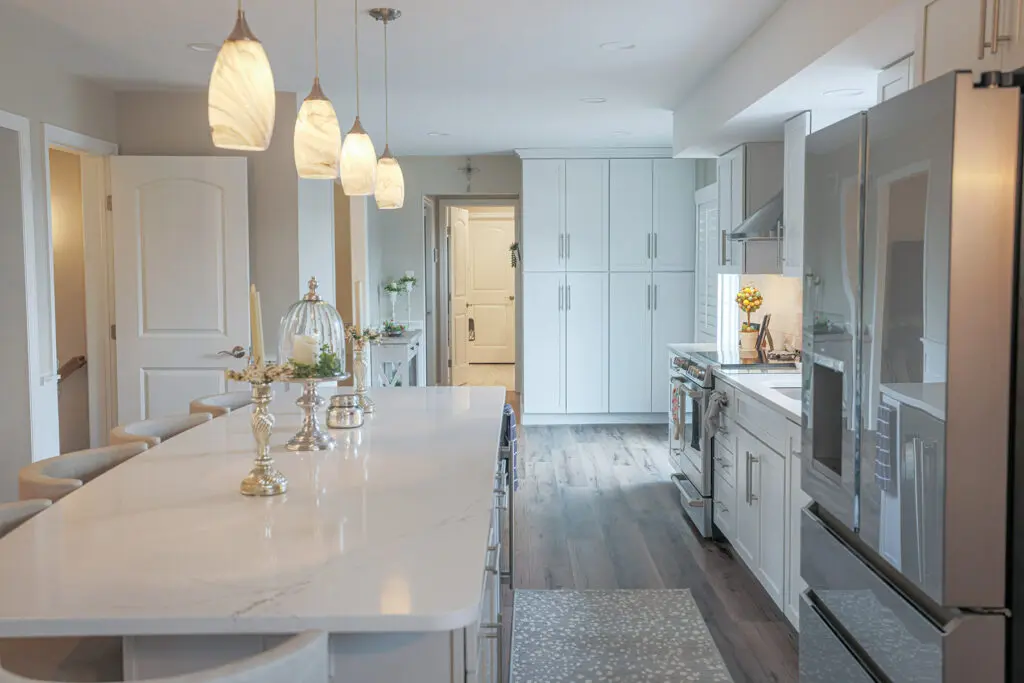
- For open layouts common in Lancaster County farmhouses and new builds, wood-look LVP running continuously through the kitchen and living areas creates a cohesive, modern look.
Come See the Options at Heritage Floors
The best way to evaluate kitchen flooring is to see it in person. At our Heritage Floors showroom, you can compare tile, LVP, and engineered hardwood side by side — and our consultants will help you think through the full picture, from installation to long-term maintenance. Stop in and let’s find the right floor for your kitchen.