
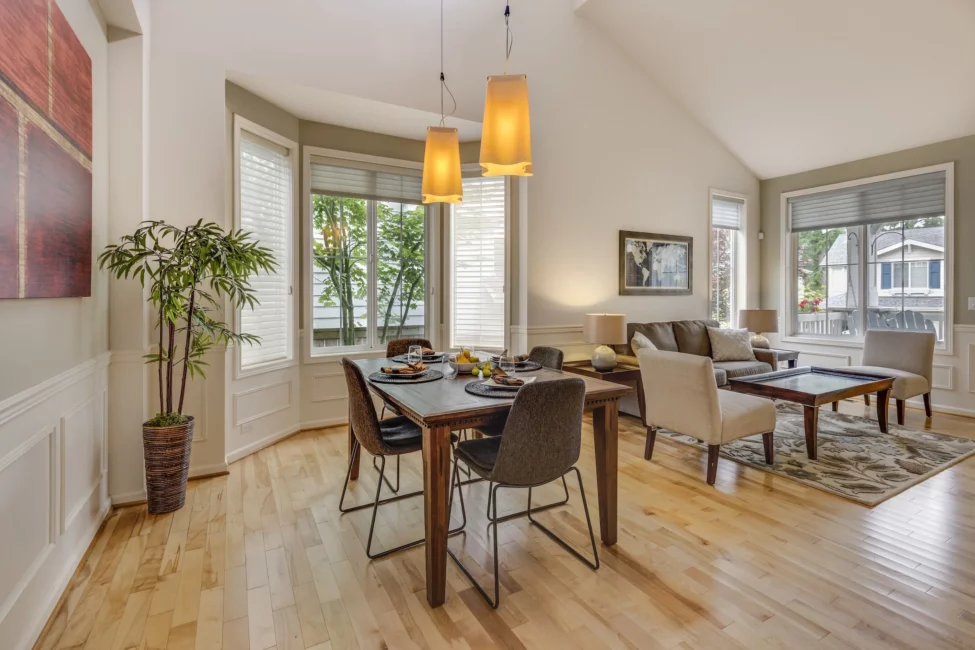
If you’re shopping for real wood flooring, you’ll quickly encounter two categories: solid hardwood and engineered hardwood. Both are made from actual wood. Both look beautiful. But they’re built differently, perform differently, and are suited to different applications. Understanding the distinction will help you make a much better decision for your home — especially in Lancaster County, where our climate plays a real role in how flooring performs.
Solid Hardwood: What It Is
Solid hardwood is exactly what it sounds like: a plank of wood milled from a single piece of timber, typically 3/4” thick. Species options include white oak, red oak, maple, cherry, hickory, walnut, and more. Each plank is the same wood species all the way through, which means it can be sanded and refinished multiple times over its life — often 50, 75, or even 100+ years with proper care. Solid hardwood is typically nailed or stapled to a wood subfloor and should not be installed below grade or directly over concrete.
Engineered Hardwood: What It Is
Engineered hardwood has a top layer (called the veneer or wear layer) of real hardwood bonded over a core of cross-laminated plywood or HDF (high-density fiberboard). The cross-ply construction makes engineered hardwood significantly more dimensionally stable — it doesn’t expand and contract with humidity changes the way solid wood does. This is a major practical advantage in Pennsylvania.
Key Differences Side by Side
- Construction: Solid = one piece of wood top to bottom. Engineered = real wood veneer over a stable plywood core.
- Stability: Engineered wins. In Lancaster County, where summer humidity is high and winter heating dries out interiors, solid hardwood can gap in winter and swell in summer. Engineered hardwood handles this much better.
- Where you can install it: Solid hardwood is for above-grade installations on wood subfloors only. Engineered hardwood can go over wood subfloors, concrete slabs, or in basement applications (as long as moisture is controlled).
- Refinishing: Solid hardwood can be sanded and refinished 5–10+ times. Engineered hardwood can typically be refinished 1–3 times depending on veneer thickness.
- Cost: Solid hardwood is generally 10–25% more expensive than comparable engineered hardwood.
- Appearance: When installed and finished, the two products look nearly identical. An experienced eye can sometimes tell them apart at the edges, but in a room, they look the same.
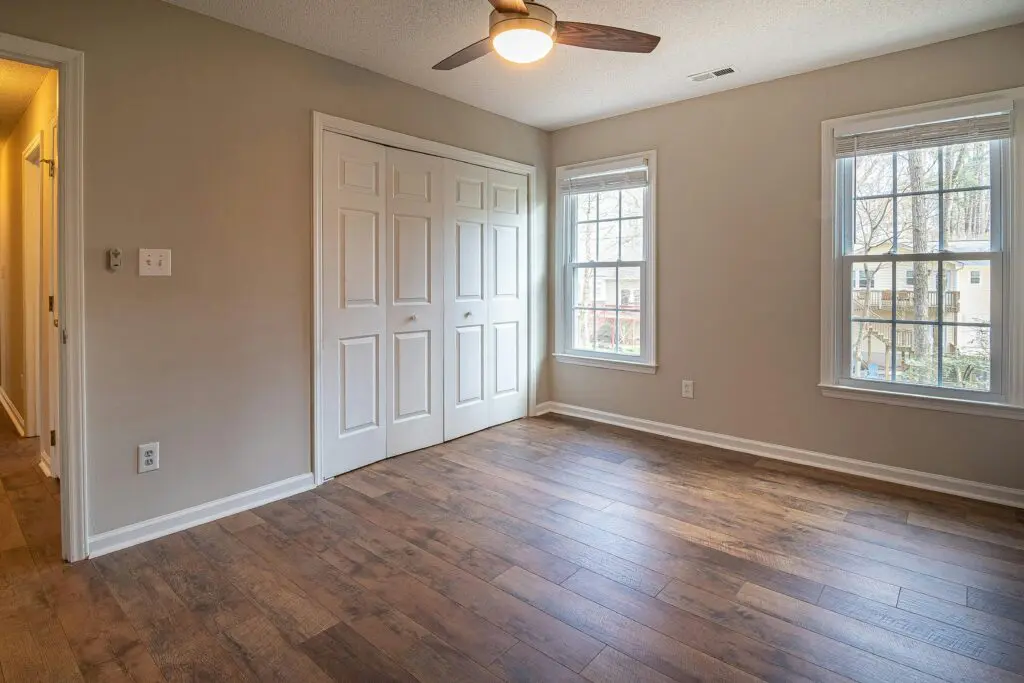
Which Is Right for Lancaster County Homes?
For most Lancaster homeowners, engineered hardwood is the more practical choice — and it’s what we most often recommend. Pennsylvania’s climate means your home experiences real humidity fluctuations between seasons, and engineered hardwood handles that more gracefully than solid. If you’re installing over a concrete slab (common in ranchers and additions), engineered hardwood is the only real-wood option.
Solid hardwood makes the most sense in above-grade installations on wood subfloors where you want the maximum refinishing potential over a very long lifespan — and when you’re willing to manage humidity in your home seasonally.
See Both at Heritage Floors
The best way to understand the difference is to touch and compare both products in person. We carry a wide selection of solid and engineered hardwood at our showroom and can walk you through species, grades, finish options, and installation considerations for your specific project. Come visit us and we’ll help you find the right hardwood for your home.