

One of the most common questions we answer at Heritage Floors is: “Can I just use the same flooring throughout the whole house?” The answer is: sometimes yes, but more often the smartest approach is matching each room’s floor to that room’s demands. Different rooms have different priorities — moisture, traffic, comfort, acoustics. Here’s how to think about flooring decisions room by room.
A Note on Whole-Home Consistency
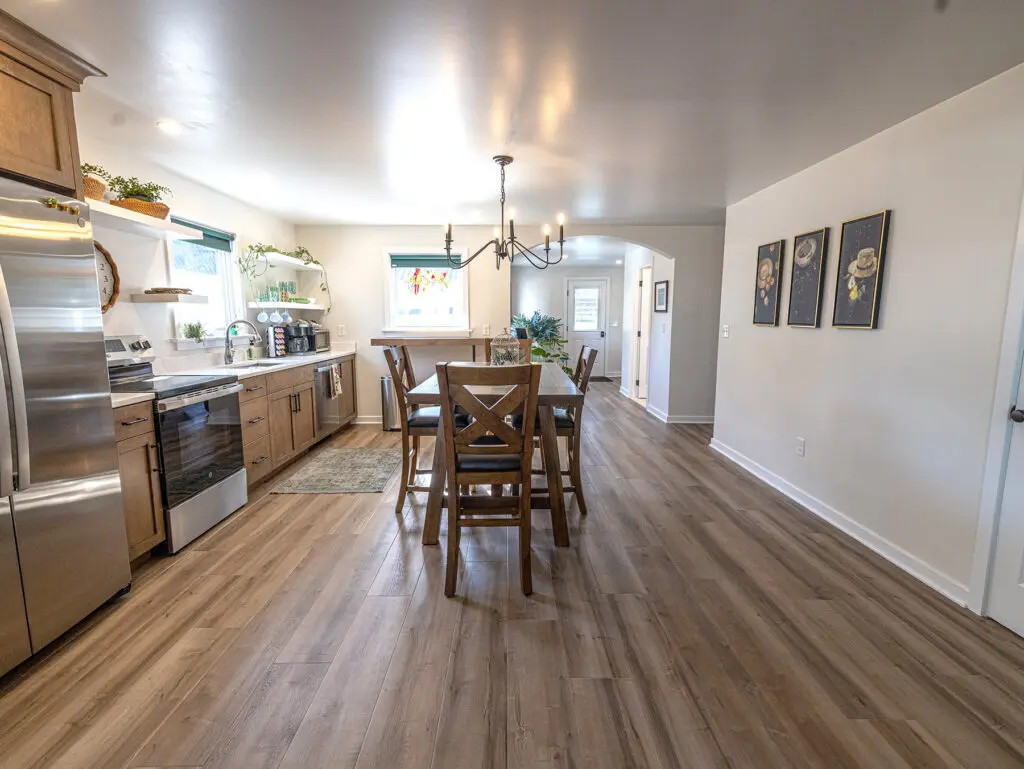
Before we go room by room, it’s worth addressing the trend toward whole-home consistency. Running the same LVP or hardwood throughout your main living level — kitchen, dining, living room, hallways — creates a seamless, spacious feel that’s very appealing in modern Lancaster homes. Where you’ll typically want to depart from a single material is in wet areas (bathrooms) and sometimes in bedrooms (where carpet’s comfort advantage is hard to beat).
Living Room and Dining Room
These are your highest-visibility areas — the floors your guests see first and that set the tone for the whole home. Hardwood (solid or engineered) is a classic and adds real value. LVP in a quality wood-look is an increasingly popular alternative that delivers great aesthetics with better durability. Avoid carpet in main living areas if you can; it shows wear in traffic patterns and limits your resale appeal.
Kitchen
Waterproof is non-negotiable. LVP and porcelain tile are the top two choices. If your kitchen is open to a living or dining area, running the same LVP throughout the open plan creates a clean, cohesive look.
Bathrooms
Waterproof and slip-resistant are your top priorities. Porcelain tile is the most popular and practical choice for bathrooms. LVP/LVT also works well and offers a warmer feel underfoot. Avoid solid hardwood and carpet entirely.
Bedrooms
Bedrooms are low-moisture, low-traffic spaces where comfort often takes priority. Carpet remains the most popular bedroom floor choice for good reason — it’s soft, warm, and quiet underfoot. Hardwood or LVP also works beautifully in bedrooms, especially in master suites where design cohesion with the rest of the home matters. For kids’ rooms specifically, LVP is very practical.
Mudroom and Entry
Your entry and mudroom take the worst of what comes in from outside — mud, rain, snow, and heavy foot traffic. Tile or LVP are both excellent here. Choose a format with some texture for slip resistance and a color/finish that won’t show every speck of dirt.
Basement
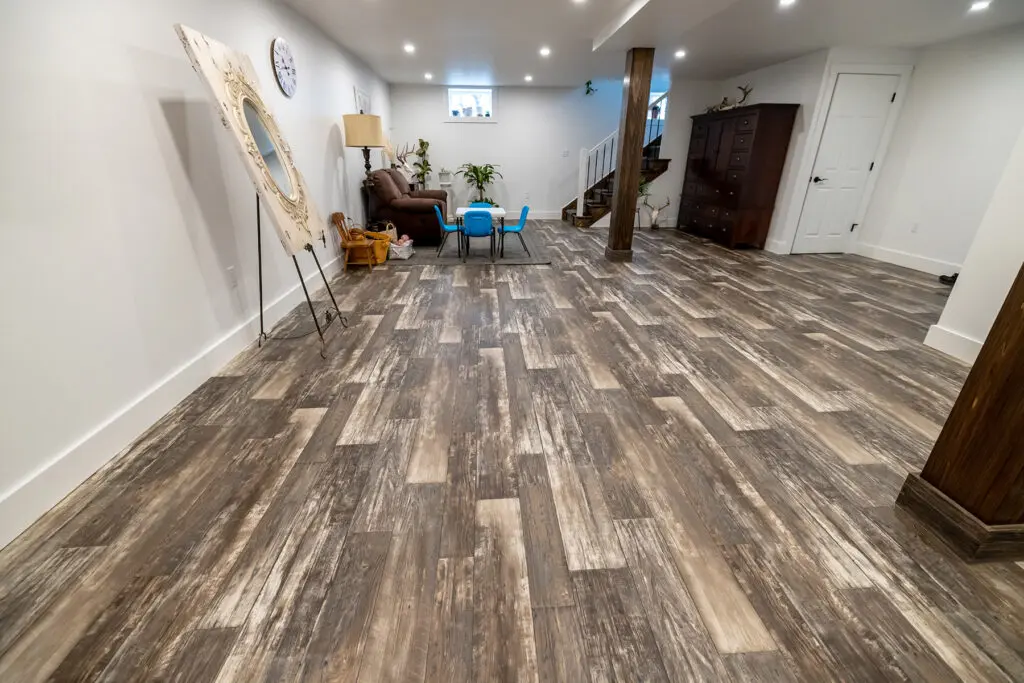
LVP is the top recommendation for most Lancaster basements. It’s waterproof, handles the temperature fluctuations of below-grade spaces, and installs as a floating floor that can handle concrete subfloor movement. Tile is also a solid choice. Solid hardwood and standard laminate are not suited for below-grade installation.
Home Office
Home offices benefit from a floor that looks professional and is easy to maintain. Hardwood and LVP are both popular. If you use a rolling office chair, choose a harder floor surface or use a chair mat — rolling chairs are hard on softer LVP and carpet over time.
Laundry Room
Waterproof tile or LVP only. Washing machines can leak; dryers create humidity. This is not the place for any moisture-sensitive material.
Let Heritage Floors Help You Plan the Whole Home
Planning flooring for multiple rooms — or a whole-home project — is something we do every week at Heritage Floors. We’ll help you think through material selection, design cohesion, budget allocation, and installation sequencing. Come into our Lancaster showroom and let’s map out your whole home together.