
Bathroom flooring has to work harder than almost any other floor in your home. It lives with constant moisture, temperature changes, the risk of spills and splashes, and needs to be safe to walk on when wet. It also needs to look good — because the bathroom is a room where design details matter. Here’s how to choose bathroom flooring that delivers on all of those fronts.
The Non-Negotiables for Bathroom Flooring
- Waterproof: Not water-resistant — fully waterproof. Bathrooms have water on the floor regularly, and any flooring that can be damaged by sustained moisture is a problem.
- Slip resistance: A wet bathroom floor is a safety hazard. Look for products with a COF (coefficient of friction) of 0.6 or higher for wet areas.
- Durability: Bathroom floors see a lot of traffic relative to their size, and cleaning products can be harsh.
- Easy to clean: Grout lines, textured surfaces, and materials that trap moisture can become breeding grounds for mold and mildew.
Best Flooring Options for Bathrooms
1. Porcelain Tile — The Gold Standard
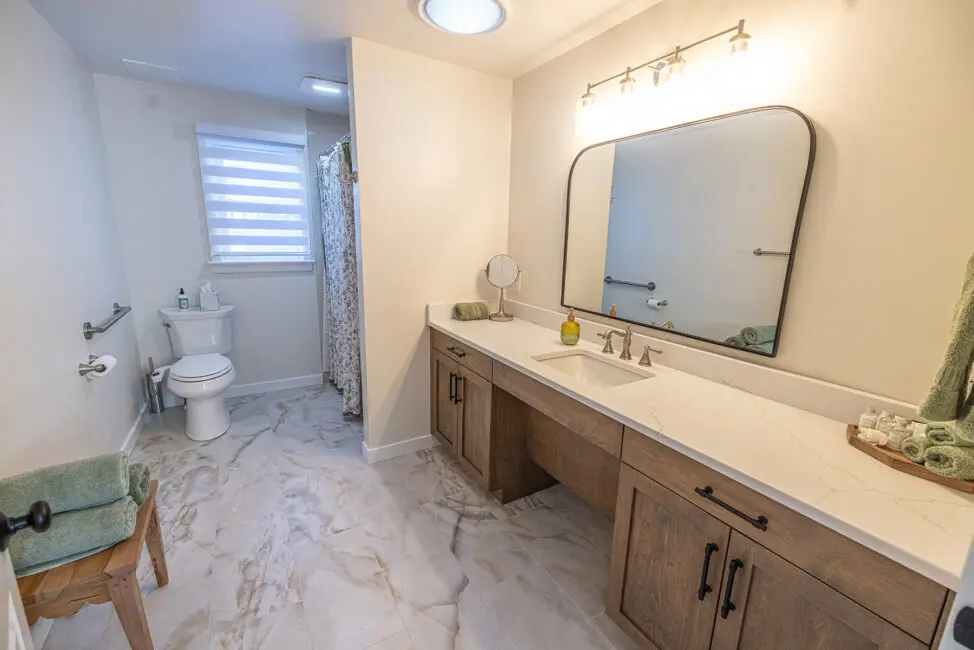
Porcelain tile is the most popular bathroom flooring choice, and it earns that status. It’s waterproof, exceptionally durable, easy to clean, and available in an enormous range of styles. For bathroom floors specifically, choose a tile with a matte or textured finish rather than glossy, which can be slippery when wet. In Lancaster County bathrooms, 12×24” and 18×18” formats are particularly popular right now, offering a clean, modern look.
2. Luxury Vinyl Plank or Tile (LVP/LVT)
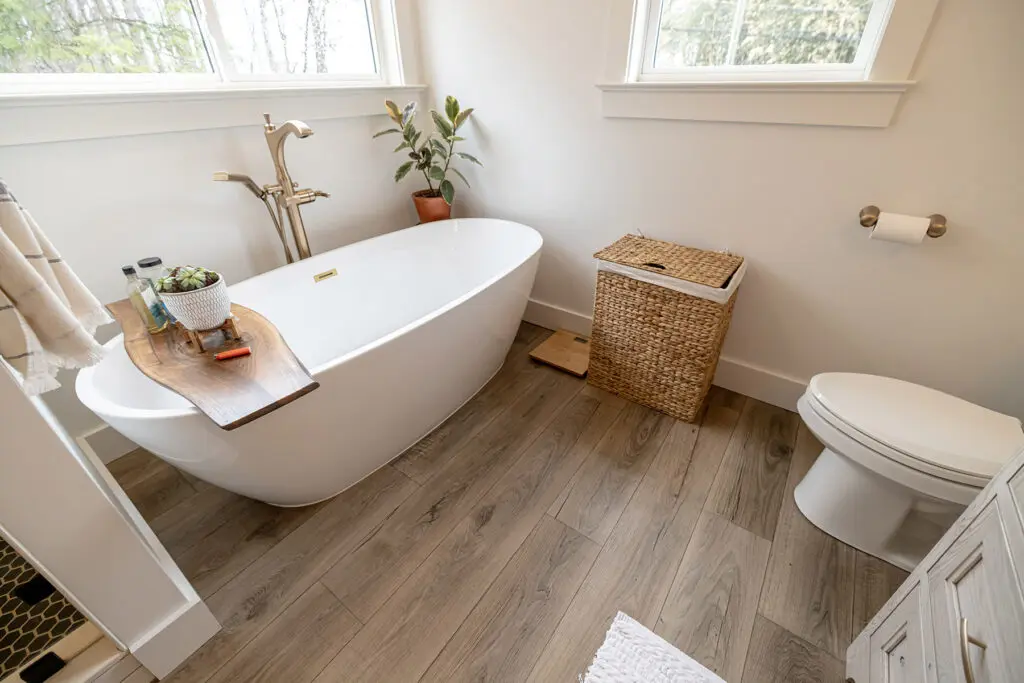
LVP and LVT are excellent bathroom flooring options. They’re 100% waterproof, warmer and softer underfoot than tile (a real advantage on a cold Lancaster morning), and available in wood-look and stone-look designs that look genuinely convincing. LVP is also more forgiving of uneven subfloors than tile, which can be an advantage in older Lancaster homes.
3. Ceramic Tile
Ceramic is similar to porcelain but softer and more porous — making it a slightly lower-cost option that still performs well in bathrooms. Choose glazed ceramic for moisture resistance. For powder rooms or half baths with light traffic, ceramic tile is a perfectly good choice. For master bathrooms with showers and heavy daily use, porcelain’s denser composition makes it the better pick.
What NOT to Install in a Bathroom
- Solid or engineered hardwood: Even engineered hardwood will struggle in a bathroom environment with consistent moisture.
- Standard laminate: Traditional laminate swells and deteriorates when it gets wet.
- Carpet: A hygiene disaster and a mold risk.
Design Ideas for Lancaster Bathrooms
- Wood-look LVP or LVT is very popular in Lancaster master bathrooms right now — it creates warmth that traditional tile can’t match.
- For small bathrooms, large-format tile laid diagonally can make the space feel larger.
- Heated floor systems work beautifully under tile and LVT — a real luxury in Pennsylvania winters.
- Hexagon tile in a matte finish is a current favorite for bathroom floors — excellent slip resistance and classic style.
- Running the same LVP from the bedroom into the bathroom creates a seamless, spa-like feel.
See Bathroom Flooring in Person
Bathroom flooring decisions benefit enormously from seeing the product in person — the texture, the color in different light, and the scale of the format relative to your space. Come to Heritage Floors and our team will help you find a bathroom floor that’s safe, durable, and genuinely beautiful.