
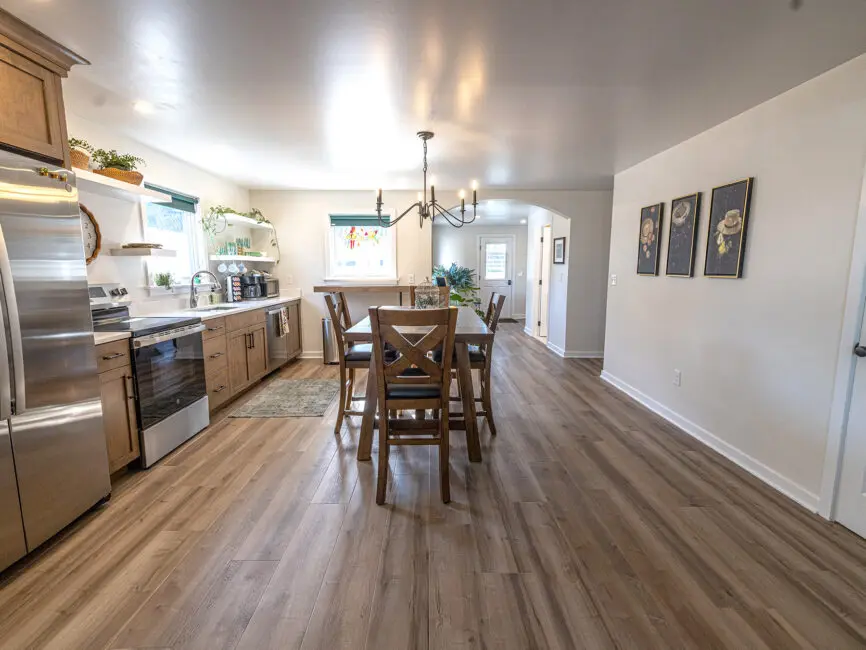
If you’ve spent more than ten minutes researching flooring, you’ve hit this debate: hardwood or luxury vinyl plank (LVP)? Both look beautiful. Both are wildly popular in Lancaster County homes right now. But they’re not the same product, and the right choice depends heavily on your lifestyle, your home’s layout, and your long-term goals. Let’s break it down honestly.
What Is Luxury Vinyl Plank?
LVP is a multi-layer synthetic flooring product designed to mimic the look of real wood. The top layer is a high-definition photographic print sealed under a wear layer — and today’s LVP looks remarkably realistic. Beneath that is a rigid core (often WPC or SPC construction), which gives it stability and some cushion underfoot. LVP is 100% waterproof, highly durable, and tends to be easier to install than hardwood.
What Is Hardwood?
Hardwood flooring is milled from actual trees — species like white oak, maple, hickory, and walnut are popular choices right now. It comes in two main forms: solid hardwood (a single plank of wood from top to bottom) and engineered hardwood (a real wood veneer over a plywood core). Both deliver the genuine warmth, texture, and character that only real wood can offer.
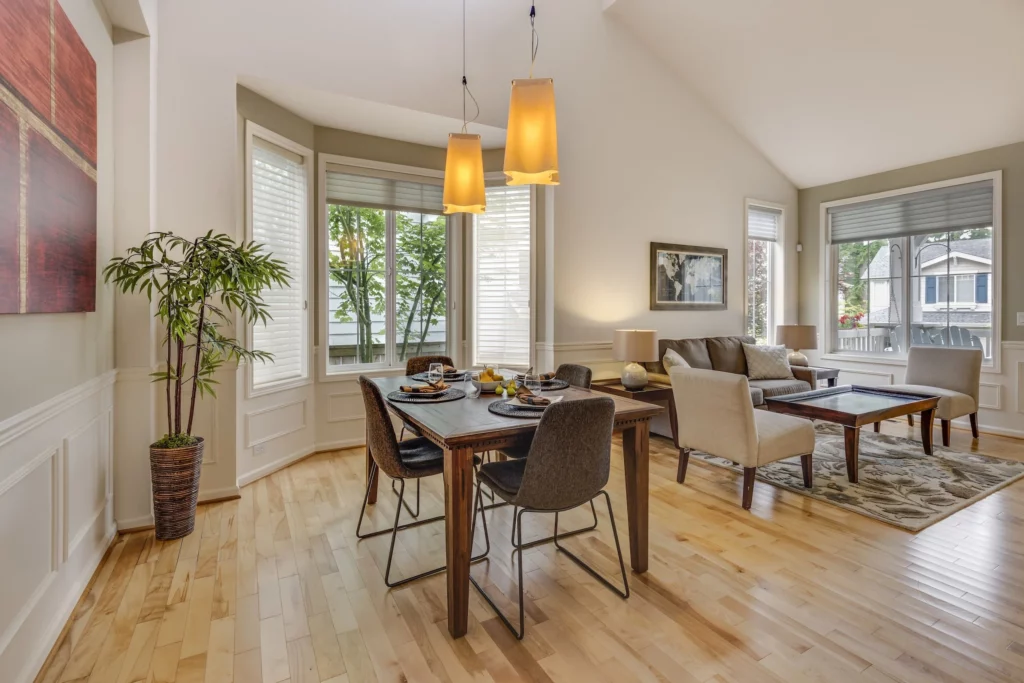
Head-to-Head Comparison
- Water resistance: LVP wins clearly. It’s 100% waterproof — safe for kitchens, bathrooms, mudrooms, and basements. Hardwood can be damaged by standing water.
- Durability: Both are durable, but differently. LVP resists scratches, dents, and moisture. Hardwood can be scratched more easily, but it can also be sanded and refinished to look brand new — something LVP cannot do.
- Lifespan: With proper care, solid hardwood can last 50–100 years or more. High-quality LVP typically lasts 20–30 years.
- Appearance: Real hardwood has an authentic texture, depth, and variation that modern LVP replicates well but often doesn’t quite match. Up close and underfoot, hardwood has a warmth that’s hard to replicate.
- Cost: LVP is generally less expensive. Expect to save $3–$8 per sq ft compared to hardwood on average.
- Installation: LVP is a floating floor that clicks together, making it faster and less disruptive. Hardwood often requires nailing or gluing and needs time to acclimate to your home.
- Resale value: Hardwood still commands a premium in real estate. In Lancaster County, buyers notice and value real wood floors. LVP is also viewed positively, but may not add the same dollar-per-dollar value.
Which One Should You Choose?
- Choose LVP if: you have kids or pets, you’re installing in a basement or kitchen, you want lower maintenance, or you’re working within a tighter budget.
- Choose hardwood if: you want the real thing and the long-term value that comes with it, you’re installing in main living areas or bedrooms, and you can commit to some basic upkeep.
- Choose engineered hardwood if: you love the look of real wood but want something more stable — particularly in spaces with humidity variation, which is common in older Lancaster County homes.
The Bottom Line
There’s no universally right answer — there’s only the right answer for your home, your family, and your budget. The best thing you can do is come into the Heritage Floors showroom, see the products side by side, and talk with one of our flooring consultants who knows this area. We’ll ask the right questions and point you in the right direction.